PersingerGroup.com

Providing local news, info, and tips and tricks for homeowners and those interested in buying or selling real estate in North Idaho or Western Washington. 

Also, listen to the Real Estate, Money and Marriage Podcast at KatherineAndDarin.com

Sept. 8, 2026

How to Sell Your Home for the Most Money

How to Sell Your Home for the Most Money

Selling your home for the most money does not necessarily mean accepting the highest offer.

A larger offer can come with expensive concessions, uncertain financing, a weak appraisal, or an inspection contingency that gives the buyer room to renegotiate.

You can also increase your sale price by remodeling the kitchen, replacing the flooring, and spending months preparing, only to discover that the extra money you received did not cover what you spent.

What matters is not simply the price written at the top of the offer.

What matters is how much money you walk away with, how likely the transaction is to close, and whether the sale helps you make your next move.

To accomplish that, focus on six things:

  1. Get into the Home Is Sold Mindset

  2. Price your home for today’s buyers

  3. Prepare strategically, not perfectly

  4. Market your home to create demand

  5. Negotiate the entire offer

  6. Protect the sale through closing

1. Get Into the Home Is Sold Mindset

Before you start worrying about paint colors, listing photos, or closing day, you need to get into what we call the Home Is Sold Mindset.

Here is the difficult reality:

Once you decide to sell, the house cannot continue functioning only as your home.

It is now a product competing against other homes in the marketplace.

You can still remember bringing your children home from the hospital, celebrating holidays there, and creating years of memories.

Those memories matter to you.

But buyers are comparing your home with every other option available to them. They are looking at its condition, location, price, layout, and what it would allow them to do with their lives.

Emotional attachment can make it difficult to prepare the home, price it realistically, or accept reasonable feedback.

We once met with a seller after her home had failed to sell with another real estate agent.

She wanted us to rescue the sale.

During our Marketing and Pricing Diagnostic, she admitted that she had not actually been ready to let the house go when she first listed it.

That hesitation cost her.

The home sat vacant while she made another year of payments. It also developed a stigma because buyers had watched it remain on the market and started wondering what was wrong with it.

Getting into the Home Is Sold Mindset does not mean your memories are unimportant.

It means recognizing that the sooner you treat the property like something you intend to sell, the easier it becomes to make decisions that protect your money.

2. Price Your Home for Today’s Buyers

Your home is not worth what it might have sold for during a different market.

It is not automatically worth what your neighbor received.

It is not worth more because of what you paid, what you spent remodeling, or how much money you need for your next home.

The market value of your home is determined by what today’s buyers are willing to pay when comparing it with their other available choices.

Buyers do not care what:

  • Your neighbor says the home is worth

  • An online estimate says

  • Your property-tax assessment says

  • You paid for the home

  • You spent on repairs or renovations

  • It would cost to rebuild

  • You need to walk away with

  • You want to receive

Those things may matter to you, but none of them is buying your home.

Buyers compare your home with competing listings, homes under contract, and recent sales. They also consider what else their monthly payment could buy.

That is why pricing is not about choosing the biggest number you can defend.

It is about positioning the home to attract serious buyers.

An overpriced home can sit while buyers choose better-positioned properties. Eventually, the seller reduces the price, but by then the listing has lost its initial burst of attention.

Buyers begin asking why it has not sold.

The goal is not to give the home away.

The goal is to choose a price that creates interest, protects your negotiating position, and gives you the best opportunity to produce a strong sale.

Just because you put your home ON the market doesn't mean it is IN the market. 

3. Prepare Strategically, Not Perfectly

When homeowners start thinking about selling, they suddenly notice everything wrong with their house.

The carpet looks worn.

The paint feels dated.

A cabinet does not close properly.

The kitchen is not as modern as the ones online.

That can produce a long and expensive project list.

But getting a home ready to sell is not about making it perfect.

It is about knowing what buyers will notice, what they will overlook, and what could prevent them from making an offer.

We recommend starting with OCD:

Organize

Remove enough furniture and belongings to make rooms, closets, counters, and storage areas feel usable.

You are not trying to make the home look empty. You are helping buyers understand the space.

Clean

A clean home feels better maintained.

Pay particular attention to kitchens, bathrooms, flooring, windows, odors, and the areas buyers see when they first arrive.

Declutter

Get rid of things you no longer need. Pack anything you want to keep but will not use before moving.

Decluttering helps the home feel larger and makes it easier to keep ready for showings.

After OCD, focus on repairs and deferred maintenance.

A new countertop might look impressive, but it will not compensate for a leaking roof, damaged flooring, or a list of problems discovered during the inspection.

Updates can sometimes improve the presentation and perceived value of a home. But a higher sale price does not guarantee that you will recover what you spent.

Before remodeling the kitchen or replacing every floor, determine whether the project will improve your net proceeds.

These resources can help:

4. Market Your Home to Create Demand

Putting a home in the MLS is not the same as marketing it.

The MLS makes the property available to buyers who are already searching. Marketing helps the right buyers notice it, understand it, and become interested enough to take the next step.

The first showing usually happens online.

Before a buyer walks through the front door, they have probably seen the photos, read the description, studied the location, and compared the home with several others.

That first impression should answer two questions:

  1. Why should someone consider this home?

  2. What could living here allow them to do?

Bedrooms, bathrooms, square footage, and flooring matter.

But those are features and dimensions.

Effective marketing also shows buyers what the home does for them.

A fenced yard might give their dog room to run.

A main-floor primary suite might allow them to avoid stairs.

A smaller townhome might give them more time at the lake and fewer weekends maintaining a yard.

Professional photography, useful video, thoughtful positioning, accurate information, and targeted distribution should work together to tell that story.

More exposure alone is not the goal.

The goal is to create more interest from the buyers most likely to value the home.

More qualified interest gives a seller a better chance of receiving a stronger offer and negotiating from a position of strength.

5. Negotiate the Entire Offer

The highest offer is not always the best offer.

Price matters, but it is only one part of the agreement.

A strong offer should be evaluated based on:

  • Financing

  • Down payment

  • Earnest money

  • Inspection terms

  • Appraisal risk

  • Requested concessions

  • Contingencies

  • Closing date

  • Possession terms

  • The buyer’s ability and willingness to perform

For example, one buyer might offer more but request a large closing-cost credit.

Another might waive important protections without having the financial strength to handle an appraisal issue.

A third might offer slightly less but provide stronger financing, fewer contingencies, and a timeline that fits your next move.

The best offer is the combination of price, terms, certainty, and convenience that produces the strongest overall result for you.

Good negotiation also continues after the offer is accepted.

Inspection findings, appraisal results, repair requests, title issues, financing delays, and closing timelines can all affect how much money you receive and whether the transaction closes.

6. Protect the Sale Through Closing

Accepting an offer is not the finish line.

It is the beginning of the transaction.

Between acceptance and closing, the sale may need to pass through:

  • Inspection

  • Repair negotiations

  • Appraisal

  • Buyer financing

  • Title review

  • Contingency deadlines

  • Final walkthrough

  • Closing and possession

Missed deadlines, poor communication, or unresolved problems can place the transaction at risk.

This matters even more when you are also buying another home.

A delay in your sale can affect your down payment, financing, moving plans, possession date, or ability to close on the next property.

Selling for the most money means protecting the agreement until the transaction is complete and the proceeds are available for your next move.

Choosing the Right Real Estate Agents

Most people know several real estate agents.

The important question is not whether someone can place your home in the MLS.

It is whether they have a plan for every part of the sale.

Ask:

  • How will they determine the home’s market position?

  • Which repairs or improvements do they recommend?

  • How will they present the home online?

  • What will they do beyond placing it in the MLS?

  • How will they follow up with interested buyers?

  • How will they evaluate and negotiate offers?

  • Who will communicate with you after the offer is accepted?

  • Who will protect the transaction through closing?

When you work with Persinger Group, you work directly with Katherine and Darin.

We help you decide what is worth doing, position the home for today’s market, create the marketing, negotiate the offer, and navigate the transaction through closing.

No handoff to a showing agent or transaction coordinator.

Us, the whole way through.

Your Next Step

You do not have to be ready to list your home before talking with us.

If you are considering a move, we can help you understand:

  • What your home could sell for

  • What you might need to do before selling

  • What you should avoid spending money on

  • How the sale could fit with buying your next home
Start a Smart Moves Conversation with Katherine and Darin

Posted in Home Selling Tips
July 21, 2026

Staging vs. Style: Why Your Home Needs One Thing When You Sell (And It's Not Your Personality)

Selling Your Home

Style Is for You. Staging Is for Everyone Else.

Why so many well-decorated homes still sit on the market longer than they should — and the shift that changes it.

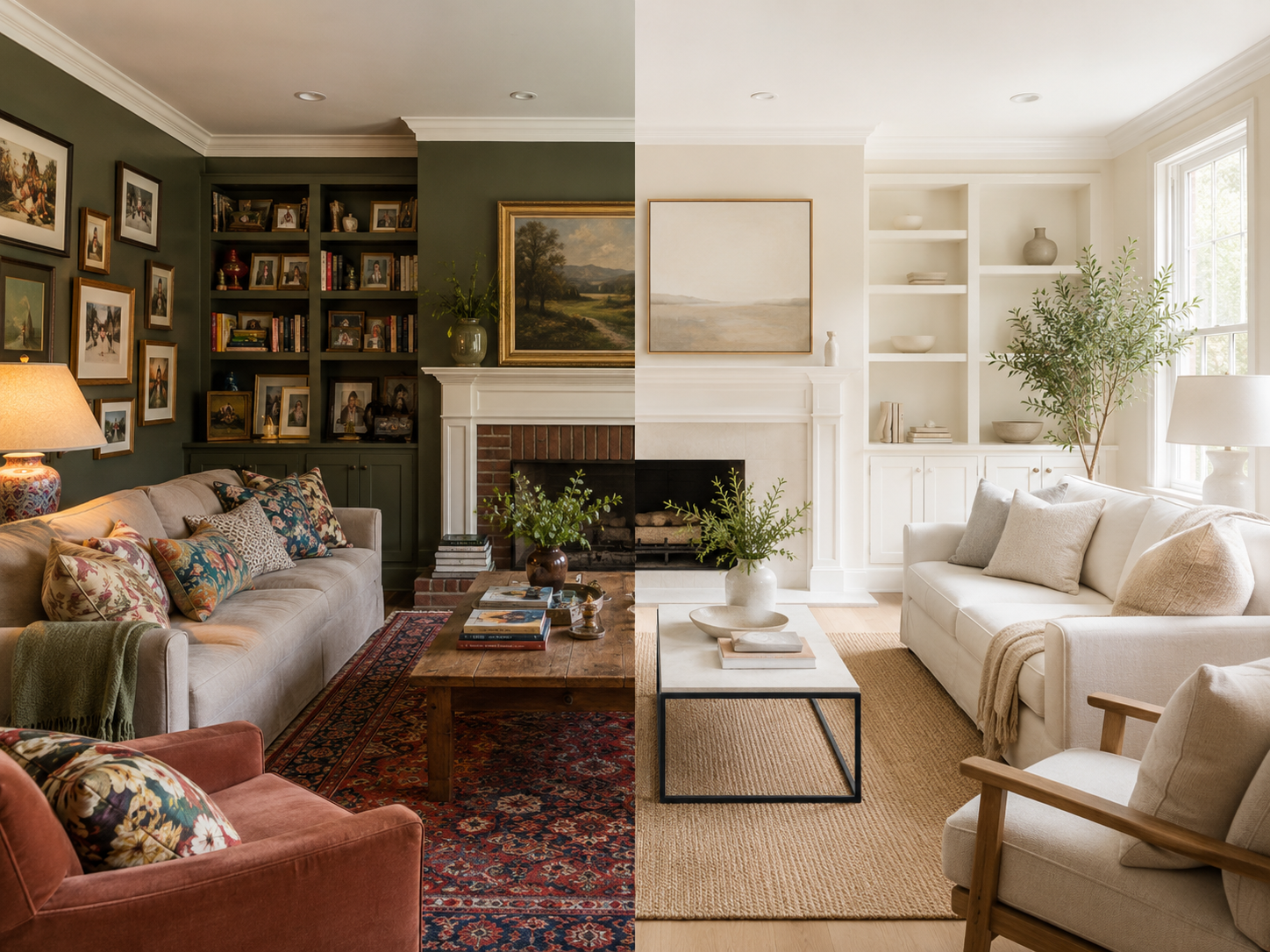
Split image of a living room showing a personal, heavily decorated style on the left and a neutral, staged version on the right
Same room, two different jobs: showcasing your taste vs. showcasing the home.

Your home reflects who you are. The art on the walls, the color you painted the accent wall, the furniture you saved up for — none of that is wrong. It's yours, and it should be.

A home isn't just walls and square footage. It's where memories get made — birthdays in that kitchen, holidays around that table, kids growing up in those bedrooms. That's real, and it matters. Nobody's asking you to forget that or pretend it doesn't.

But the day you decide to sell, the goal changes. You're no longer decorating for yourself. You're presenting the home to strangers who need to picture themselves living there, so they can start making their own memories in it. That's the whole difference between style and staging, and it's why so many well-decorated homes still sit on the market longer than they should.

Style Is for You. Staging Is for Everyone Else.

Here's the simplest way to think about it: interior design and personal style showcase your stuff. Staging showcases the home.

Design is about identity. It says something about the people who live there — their taste, their story, their memories. That's exactly what makes a house feel like a home, and it's exactly why it needs to take a back seat when you sell.

Staging has a different job. It's not about showing off anything — yours or otherwise. It's about putting the home itself front and center and removing anything that competes with it. A buyer walking through your home isn't shopping for your taste. They're trying to answer one question: could I see myself here?

Bold colors, heavy patterns, collections, family photos, personal keepsakes — all of it competes for attention. And when a buyer is busy noticing your things, they're not picturing their own.


Why "But I Love It This Way" Doesn't Help You Sell

We hear this a lot: "We just redid this room and we love it." We believe you. But loving a space and selling a space are two different games with two different rules.

Buyers aren't touring your home to compliment your choices. They're comparing it — consciously or not — to every other listing they've seen that week. A staged home gives them less to react to and more room to project themselves into it. A heavily personalized home gives them more to notice and less to imagine.

This isn't a judgment on your style. It's just what the data on home sales consistently shows: neutral, decluttered, well-staged homes sell faster and for more money than homes left in their "lived-in" personal state.


What Good Staging Actually Does

Good staging isn't just about removing your personality from a room. It's doing active work on the buyer while they walk through.

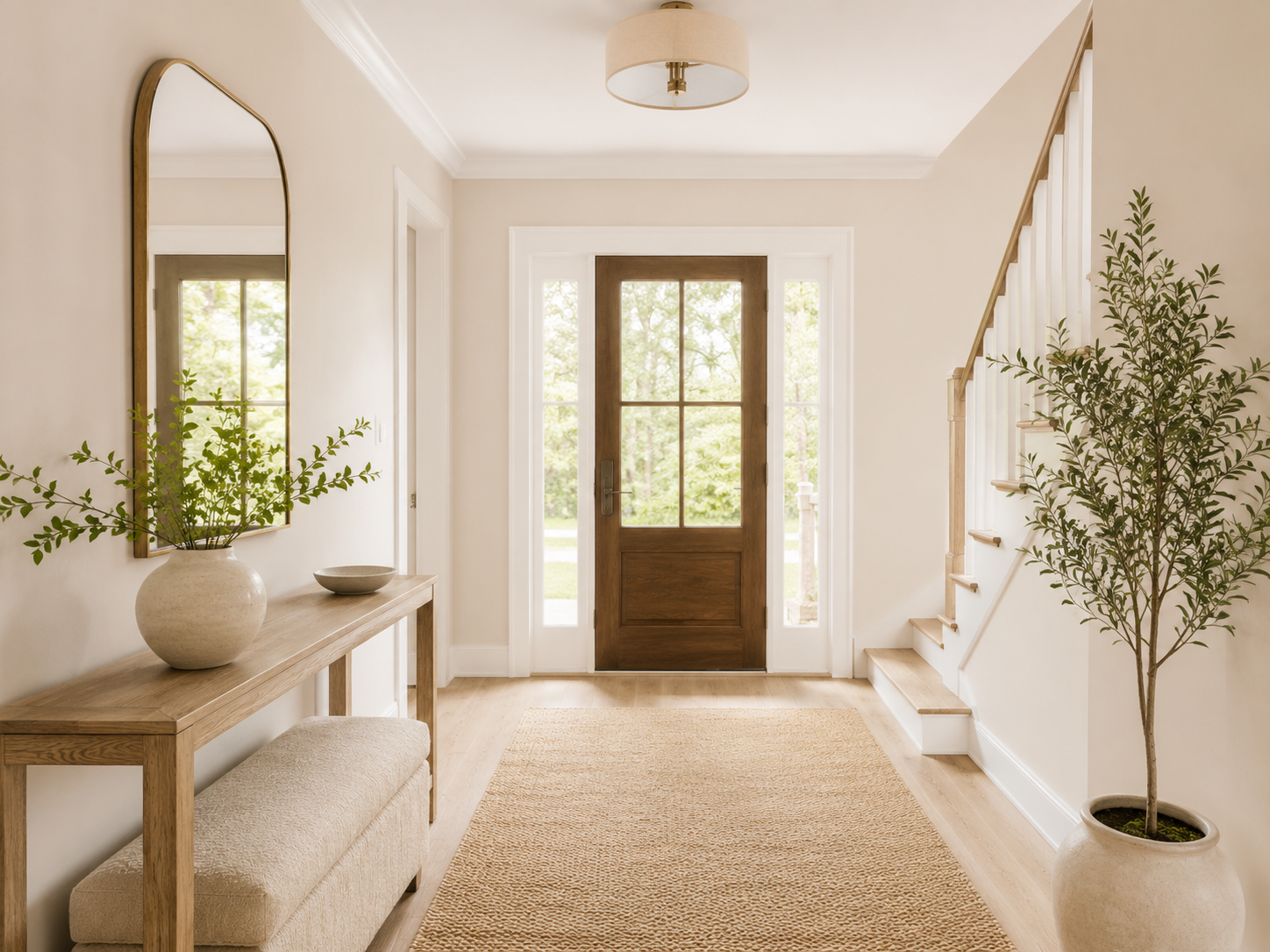
A clean, neutral entryway with a console table, mirror, bench, and jute rug leading toward the front door
A staged entry says "come see the rest," instead of making someone stop and process clutter first.
  • It invites you in. The entryway sets the tone before a buyer even steps past it. A staged entry says "come see the rest," instead of making someone stop and process clutter first.
  • It creates flow. Furniture is placed so the eye — and the feet — naturally move from one space to the next. Nothing blocks a doorway. Nothing forces an awkward walk around a couch. The home feels bigger because it's easier to move through.
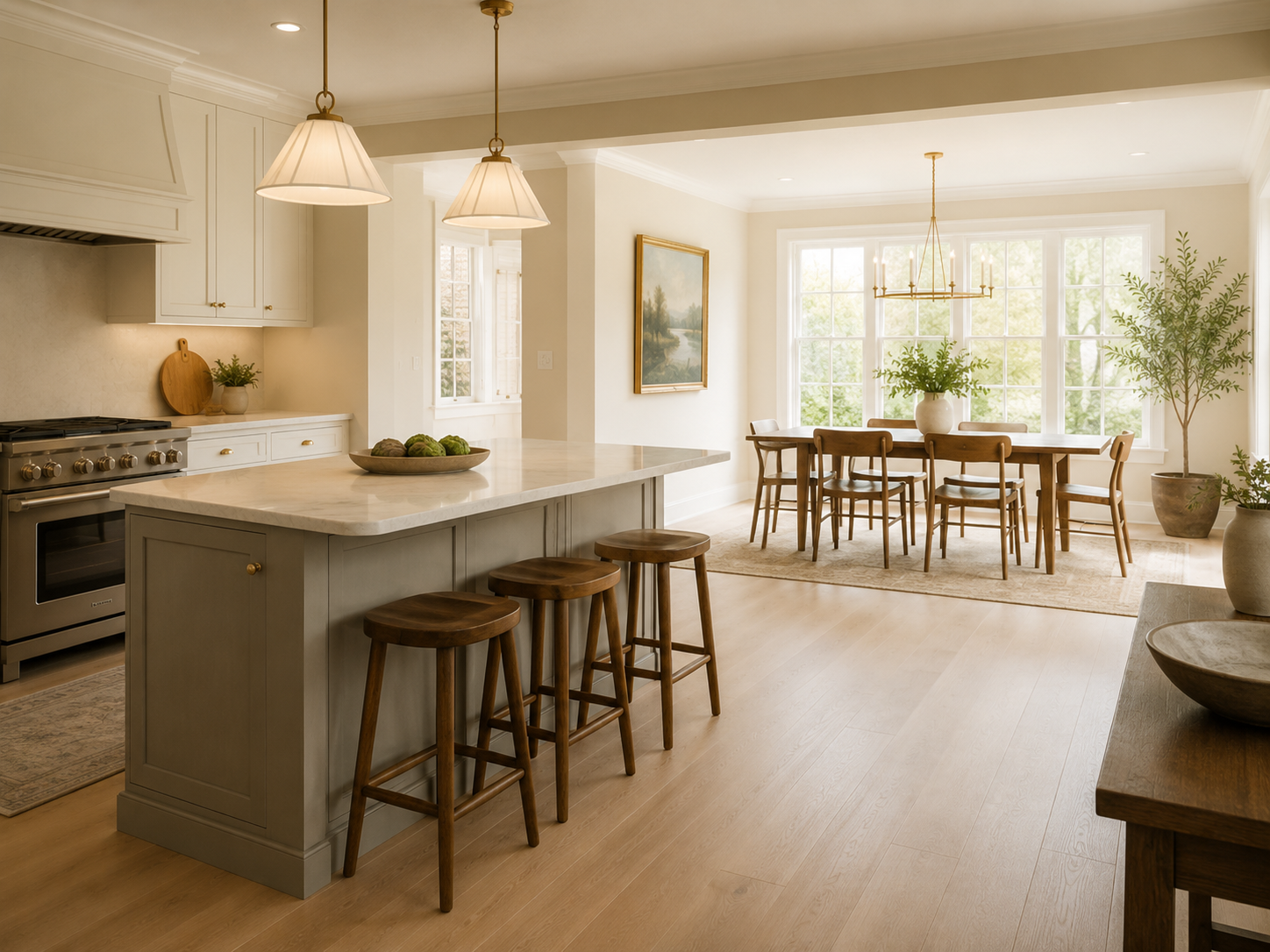
  • It pulls you into the next room. A staged home is arranged so each room hints at the next one. A clear sightline into the dining room from the kitchen, an open path toward the primary suite — it keeps buyers moving, and moving buyers stay engaged longer.
  • It highlights the best features of each room. A fireplace gets furniture arranged around it instead of blocked by it. A view gets framed, not covered by heavy drapes. A vaulted ceiling gets emphasized with the right lighting, not competed with by a bulky piece of furniture.
  • It removes the friction points that make buyers pause. Anything that makes a buyer stop and think — an odd smell, a cluttered corner, a room they can't figure out the purpose of — breaks the momentum. Staging keeps that momentum going from the front door to the backyard.
An open kitchen with a neutral island flowing into a bright dining area with a wooden table
A clear sightline from the kitchen to the dining room keeps buyers moving — and moving buyers stay engaged longer.

None of this is about tricking anyone. It's about presenting the home the way it's meant to be experienced, without the everyday clutter of actually living in it getting in the way.


What Staging Actually Looks Like

Staging isn't about stripping your home of personality and making it feel like a hotel lobby. Good staging still feels warm. It just removes friction. In practice, that usually means:

  • Neutral wall colors and simple, clean bedding and linens
  • Decluttered counters, closets, and surfaces
  • Furniture arranged to show scale and flow, not to reflect how you actually live
  • Personal photos and unique collections packed away
  • Bold or unusual paint colors softened or repainted where needed
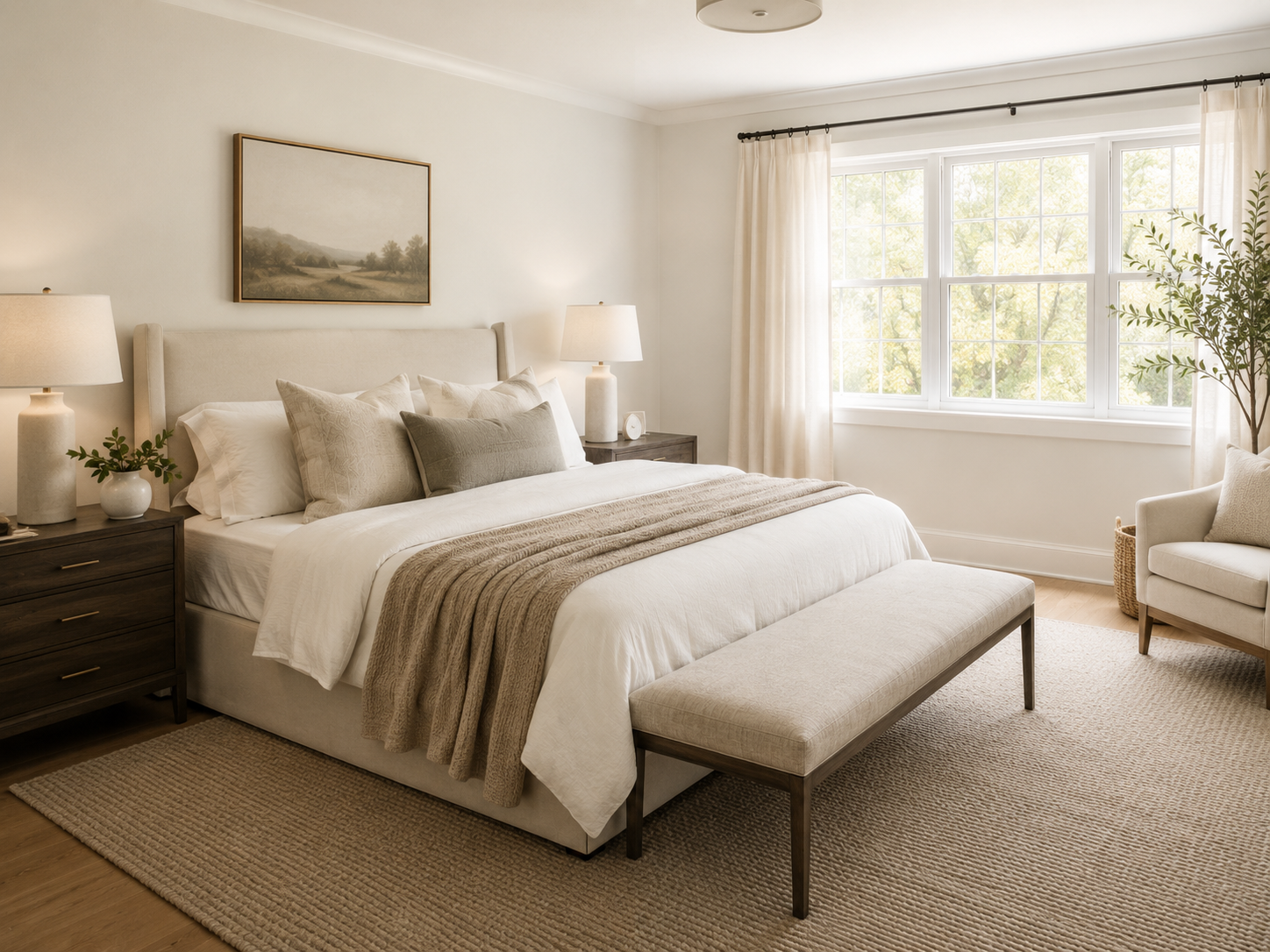
A neutral, softly styled primary bedroom with simple bedding and warm natural light
Neutral bedding, clear surfaces, warm light — staging still feels warm, it just removes friction.

None of this is permanent. It's temporary, and it's strategic. Once the home sells, your personal style comes right back with you to the next place.

A person packing a framed family photo into a moving box in a softly lit living room
Personal photos come down for the listing — and go right back up in the next home.
Keep your style in the home you're living in. When it's time to sell, switch the goal from "this feels like us" to "this could feel like you."

The Bottom Line

That shift is what gets homes sold faster, for more money, with less back-and-forth.

The memories you made in that home don't go anywhere. They're yours to keep. Staging just makes room for the next family to start making theirs.

If you're getting ready to list and aren't sure what needs to change and what can stay, that's exactly the kind of walkthrough we do with our sellers before a home ever hits the market.

Thinking about selling?

Reach out to the Persinger Group — we'll walk your home with you and tell you straight what's worth doing and what isn't.

Get in Touch
Posted in Home Selling Tips
June 3, 2026

Gozzer Ranch vs. Black Rock vs. CDA National: A Side-by-Side Breakdown

Three private club communities. Same lake. Very different price tags, structures, and member experiences. Here's what the numbers actually look like.


Quick Facts at a Glance

  Gozzer Ranch Black Rock CDA National Reserve
Opened 2007 2003 2008 (revived 2021)
Acreage 700 acres 700 acres 1,100 acres
Golf Architect Tom Fazio Jim Engh Tom Weiskopf
Golf Digest Ranking #43 in U.S. (2025–26) #160 in U.S. (2025–26) Not nationally ranked
Golf Digest Best New Private 2008 winner 2003 winner
Idaho #1 Course Yes (Golf Digest 2025–26) #2 in Idaho
Ownership/Operator Discovery Land Company Findlay Family (private) Lyon Living (Lyon Living Co.)
Membership Required to Own Yes No Yes
Real Estate Required to Join Yes No Yes
Membership Cap Not publicly disclosed ~300 historically 275 (hard cap)
Tee Times Required No Not disclosed No (by design)

Membership Costs

Gozzer Ranch

Gozzer Ranch doesn't publish fees — it's a Discovery Land Company community, and they keep pricing private. Based on Discovery's own statements and industry reporting:

  • Initiation fee: $100,000+ (Discovery Land memberships across their portfolio start here; Gozzer-specific rumors range $500K–$1M given the property value tier)
  • Annual dues: $18,000+ per year (Discovery's stated floor across their clubs; Gozzer estimates run $25,000–$50,000)
  • Real estate required: Yes. Homesites range from ½ acre to 5 acres; membership comes with property purchase.
  • Membership type: Single tier — you're in or you're not.

Note: These are estimates based on Discovery Land Company's publicly stated ranges and industry reporting. Gozzer does not disclose fees publicly.

The Golf Club at Black Rock

Black Rock had a rocky financial period around 2008–2013 that resulted in a restructured membership model. The original $125,000 initiation fee was reduced significantly.

  • Initiation fee (current range): Estimated $25,000–$75,000 (restructured from original $125,000; current figure not officially disclosed)
  • Annual dues/monthly: ~$1,000/month ($12,000/year) — confirmed from post-restructure reporting
  • F&B minimum: $750/year (food only; taxes and service charges excluded)
  • Real estate required: No. You can join without buying property.
  • Two membership tiers:
    • Black Rock Membership — Full access to all amenities
    • Legacy Membership — Limited access, restricted tee times and facilities
  • Household coverage: Spouse/significant other + unmarried dependents through age 25

CDA National Reserve

CDA National has the clearest publicly available numbers of the three, disclosed directly by CEO Frank Suryan in July 2025:

  • Initiation fee: $150,000 (one-time; includes equity interest in the resort)
  • Annual dues: $22,500/year ($1,875/month)
  • Real estate required: Yes — full golf membership is exclusive to property owners
  • Homesite prices: From $535,000
  • Built residences: Starting ~$2 million; Fairway Villas from $2 million
  • Membership cap: 275 total (matches number of residential lots)
  • Tee times: Not required — membership intentionally kept small enough to avoid them
  • Equity structure: Members hold an equity interest in the club — unlike the other two

What's Included

Gozzer Ranch

  • 18-hole Tom Fazio championship course
  • 2 full-service marinas on Lake Coeur d'Alene
  • Lake Club (swimming, water activities)
  • Spa and fitness center
  • Multiple dining venues
  • 3 StanCraft boat shuttles to/from downtown CDA
  • Red Barn event center
  • Wakeboarding and water sports programs
  • Hiking and nature trails
  • Outdoor Pursuits team (guided activities)
  • Kids programming
  • Community events (barn dance, cherry picking, tipi campouts)
  • 50s-themed comfort stations on the course (including soft-serve ice cream + root beer on tap)

Black Rock

  • 18-hole Jim Engh championship course
  • 31,000 sq. ft. clubhouse
  • Formal and casual dining
  • Pool bar and swimming pool
  • Spa
  • Fitness center
  • Tennis and pickleball
  • Private beach on Lake Coeur d'Alene
  • Black Rock Marina with boat access
  • Kids Club and summer camp
  • Year-round concierge (horseback riding, fly fishing, boating, biking, etc.)
  • Golf carts are NOT included — separate fee
  • No tipping policy

CDA National Reserve

  • 18-hole Tom Weiskopf championship course
  • 20,000 sq. ft. clubhouse (completed 2023, $13M build)
  • Farm-to-table dining + outdoor bar and patio
  • Fitness and training facility
  • Floating waterpark on Lake Coeur d'Alene
  • Private jet hangar at StanCraft Jet Center in CDA
  • Hiking and biking trail network
  • Access to 5,000-acre adjacent nature preserve
  • Axe throwing, pickleball, yoga
  • PGA professionals on staff (lessons, fittings, tech tools)
  • Sport clay shooting
  • Horseback riding
  • Cocktail cruises and member events
  • Regenerative wellness program

Real Estate Overview

Gozzer Ranch (Harrison, ID — southern Lake CDA)

  • 267 custom homesites (½ to 5 acres)
  • 34 detached cabins
  • 28 homestead cottage homes
  • 28 waterfront condominium lodge homes
  • Most homesites have lake, mountain, or golf course views
  • Properties routinely trade in the multi-millions

Gozzer Ranch is actually located in Harrison, Idaho, not Coeur d’Alene like the other communities. 

Black Rock (South Lake CDA — Coeur d'Alene)

  • Homes and homesites available within the 700-acre gated community
  • Membership not required to own real estate (and vice versa)
  • Lake, mountain, and golf course view lots
  • Properties range widely; some of North Idaho's highest-priced residential sales have occurred here

CDA National Reserve (Rockford Bay — southwest Lake CDA)

  • Active development: $165M residential project underway as of 2025
  • Homesites from $535,000
  • Fairway Villas (24 homes along 17th fairway): from $2M, 2,000–3,500 sq. ft.
  • Lake Lodges (2-story duplexes with rooftop decks, lake views): details expected summer 2026
  • Custom homes from $2M+
  • Mountain-modern architectural language throughout
  • Newest inventory of the three; least mature secondary market

Learn more about Coeur d’Alene real estate here. 


The Course, Simply Put

Gozzer Ranch — Tom Fazio at his best. Currently ranked #43 in the U.S. and #1 in Idaho. Elevated peninsula setting, black basalt rock, shaggy bunkers, Lake CDA views on multiple holes. Widely considered one of the top 50 courses in the country for good reason.

Black Rock — Jim Engh's unconventional masterpiece. Over 1,000 feet of elevation change. Bobsled-run fairways, pinball-machine par-4s framed by rock walls, cascading waterfalls. Ranked #2 in Idaho, currently #160 nationally. The back nine delivers some of the most dramatic golf in the Northwest.

CDA National Reserve — Tom Weiskopf's forested and lakeside layout. Front 10 play through pines and native grassland; "Back 8" open up to lake views. Signature 15th is a downhill par-3 with dual greens and a 180-degree lake panoramic. Not nationally ranked, but considered one of Idaho's best. Easiest of the three to score well on; still tests every club.


Bottom Line by Buyer Type

If golf ranking and national prestige matter most → Gozzer Ranch. There's no comparison on that front. The Fazio course and Discovery Land's polish make it the marquee address on the lake.

If you want club access without a real estate purchase → Black Rock is the only option of the three. It's also the most established community and the most affordable entry point for membership.

If you're a buyer looking at long-term upside in an actively developing community → CDA National Reserve. The $150K initiation + equity interest is unique. Membership is capped at 275, the infrastructure is brand new, and the real estate inventory is actively expanding. You're buying into something still being built — which is either a risk or an opportunity depending on your outlook.


All pricing data sourced from publicly available reporting. Gozzer Ranch does not publicly disclose membership fees — figures shown are based on Discovery Land Company's stated ranges and industry sources. Verify current pricing directly with each club before making any decisions.

Questions about buying or selling in any of these communities?

Reach out to the Persinger Group — we work the North Idaho real estate market and help our clients navigate in the ins and outs buying and selling when not in the area. 

Posted in Coeur d'Alene
April 13, 2026

Is Coeur d'Alene a Good Place to Buy a Short-Term Rental?

Is Coeur d'Alene a Good Place to Buy a Short-Term Rental?

View More
Posted in Coeur d'Alene
March 21, 2026

Short Term Rental Selling Checklist: Everything You Need to Do Before You List

BONUS MATERIAL: GET OUR GET-SELL-READY GUIDE. 18 SIMPLE INEXPENSIVE THINGS YOU CAN DO TO GET YOUR HOME READY FOR SALE

View More
March 12, 2026

How to Sell a Short-Term Rental Property in North Idaho (What Most Agents Won't Tell You)

How to Sell a Short-Term Rental Property in North Idaho

How to Sell a Short-Term Rental Property in North Idaho

(What Most Agents Won't Tell You)

View More
Posted in Coeur d'Alene
March 9, 2026

What Are Winters Like in Coeur d'Alene, Idaho? (An Honest, Local's Guide)

What Are Winters Like in Coeur d'Alene, Idaho? (An Honest, Local's Guide)

What Are Winters Like in Coeur d'Alene, Idaho?

(An Honest, Local's Guide)

View More
Posted in Coeur d'Alene
March 2, 2026

Things To Do In Post Falls March 2026

Must-Attend Events In Post Falls February 2026

View More
Posted in Post Falls
March 2, 2026

Things To Do In Coeur d’Alene March 2026

Must-Attend Events In CDA March 2026

View More
Posted in Coeur d'Alene
Feb. 24, 2026

Real Estate in an Uncertain Economy: What Buyers and Sellers Can Actually Control

Real Estate in an Uncertain Economy: What Buyers and Sellers Can Actually Control

Real Estate in an Uncertain Economy

What Buyers and Sellers Can Actually Control

View More
Posted in Home Buying